
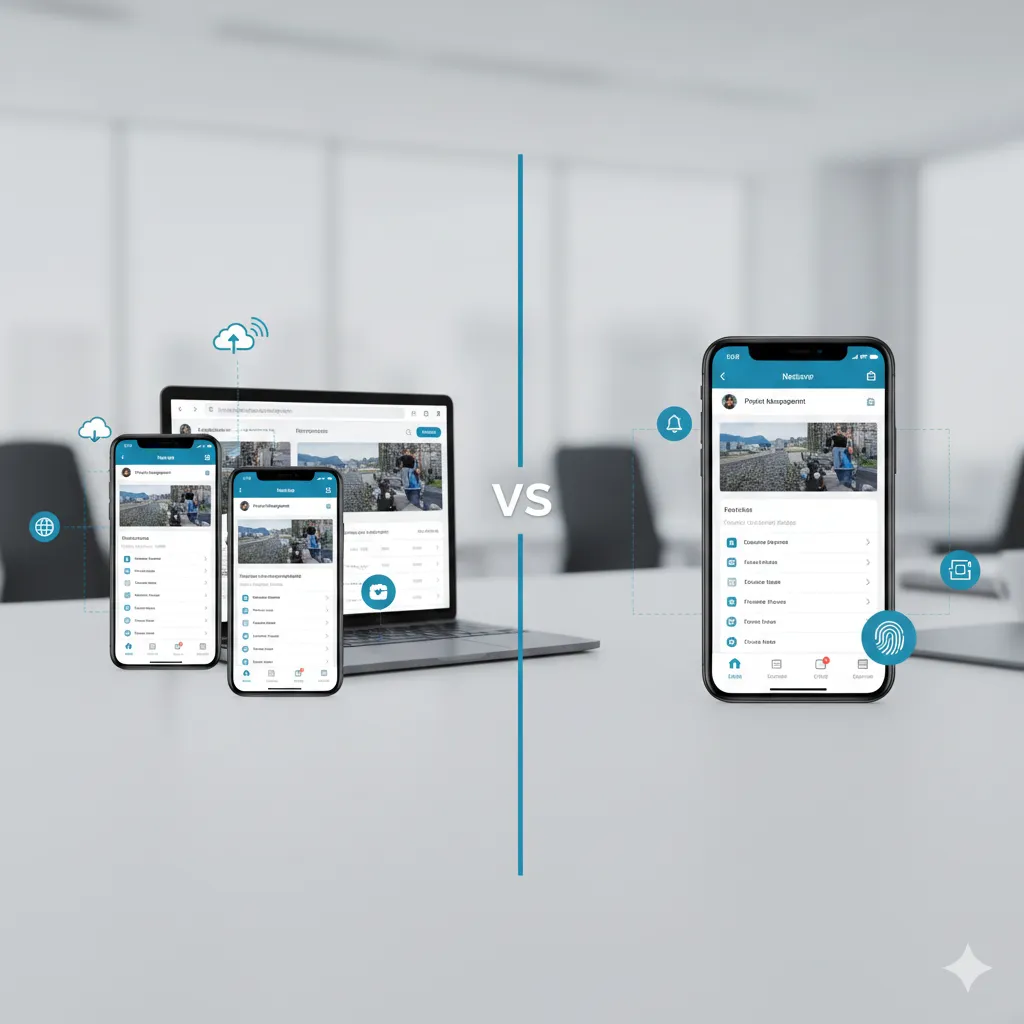
Progressive Web App vs Native App in 2026: What Should Businesses Develop?
For years, companies launching a digital product faced a simple but expensive choice: build a website or develop a mobile app. Today, that decision has become more strategic.
In 2026, organizations choose between Progressive Web Apps (PWAs) and Native Mobile Apps. Both solutions are mature, widely adopted, and capable of supporting scalable SaaS platforms and enterprise systems.
For businesses in Switzerland and Italy, the decision is no longer just about technology. It is about business goals, costs, performance, and long-term maintenance. Many organizations work with a Swiss software company to determine which architecture best aligns with their product strategy and regulatory requirements.
This article explores the differences, real-world trade-offs, and the scenarios where each solution makes the most sense.
What Is a Progressive Web App (PWA)?
A Progressive Web App is a web application that behaves like a mobile app. It runs in a browser while offering features such as installation, offline functionality, and push notifications.
Quick Definition
A Progressive Web App is a website enhanced with modern technologies that can be installed on a device, work offline, and provide an app-like experience without requiring app store distribution.
Key Features:
- Installable directly from the browser
- Works offline or with poor connectivity
- Supports push notifications
- Automatic updates
- Single codebase for all devices
PWAs are increasingly used in modern SaaS solutions and customer portals.
What Is a Native Mobile App?
A native app is developed specifically for a platform such as iOS or Android using platform-specific tools and technologies.
Typical Characteristics:
- Distributed through app stores
- Full access to device hardware
- Maximum performance
- Deep operating system integration
Native apps remain essential for high-performance applications and hardware-intensive use cases.
PWA vs Native App: Key Differences
| Feature | Progressive Web App | Native App |
|---|---|---|
| Distribution | Browser | App Store |
| Development | Single codebase | Separate iOS and Android apps |
| Updates | Automatic | Store approval required |
| Performance | High | Maximum |
| Hardware Access | Limited | Full |
| Cost | Lower | Higher |
Both are effective software development solutions, but they serve different business needs.
Why PWAs Are Growing in Popularity
1. Faster Time-to-Market
With a single codebase:
- Development is faster
- Testing is simpler
- Launches happen sooner
This is especially beneficial for startups and digital services operating in Switzerland and Italy.
2. Lower Development and Maintenance Costs
Native apps typically require:
- An iOS team
- An Android team
- Separate maintenance efforts
PWAs reduce long-term costs while still delivering a high-quality user experience.
3. Immediate User Access
Users can start using a PWA instantly:
- No mandatory installation
- No app store approval process
- Immediate onboarding
For customer-facing platforms, this can be a major advantage.
Where Native Apps Remain Superior
Despite significant improvements in PWA technology, native apps are still indispensable in certain situations.
Ideal Use Cases for Native Apps
- Banking applications
- Real-time gaming
- AR/VR applications
- Advanced hardware usage (sensors, Bluetooth, camera)
Native apps provide complete control over the device and operating system.
How to Choose
Choose a PWA When:
- You are building a SaaS platform
- Fast onboarding is important
- Budget is limited
- Cross-platform access is required
Choose a Native App When:
- The app heavily relies on device hardware
- Maximum performance is required
- Offline functionality is complex
- OS-level security features are necessary
In many cases, the decision is more strategic than technical.
Hybrid Strategies Are Becoming More Common
In 2026, many companies combine both approaches.
Typical Architecture:
- PWA for public access and onboarding
- Native app for advanced functionality
An experienced software development partner can help design the most effective architecture.
Security and Compliance
Security remains critical across Europe.
Companies in Switzerland and Italy must comply with:
- GDPR
- Data protection regulations
- Secure authentication requirements
Both PWAs and native apps can be highly secure. The key factor is the underlying architecture.
Swiss IT service providers often include:
- Secure authentication systems
- Encryption strategies
- Compliance-focused architecture
Why Swiss Software Companies Are Often Preferred
Choosing between PWA and native development requires both technical expertise and strategic planning.
- Engineering quality
- Built-in security practices
- Regulatory expertise
- Structured documentation
- Long-term support
For Italian businesses, this often means innovation combined with reliability.
Real-World Examples
PWA Examples
- Customer portals
- Booking systems
- E-commerce platforms
- Business dashboards
Native App Examples
- Mobile banking
- Health monitoring applications
- Connected-device services
- Industrial control systems
These solutions are often part of broader custom software development ecosystems.
Impact on SaaS Platforms
Many SaaS platforms use PWAs as their primary interface because:
- Updates are delivered instantly
- Access is simpler
- User adoption rates are higher
Native apps are frequently added later to support advanced features.
How to Choose the Right Technology Partner
When evaluating a software company, consider:
- Web and mobile expertise
- Architectural capabilities
- Security and compliance knowledge
- Long-term support services
Conclusion
In 2026, the debate between Progressive Web Apps and Native Apps is no longer about which technology is better. It is about which solution best supports a company's objectives.
PWAs offer accessibility, faster deployment, and lower costs.
Native apps provide maximum performance and deeper system integration.
For businesses in Switzerland and Italy, successful digital products are built on a clear strategy rather than a default technology choice.
By partnering with an experienced Swiss software company, organizations can build scalable SaaS platforms and custom digital solutions that balance user experience, security, and long-term maintainability.
Organizations planning new digital products can benefit from structured consulting to determine whether a PWA, a Native App, or a Hybrid Approach will best support future growth.